Entry of
Why this almanac is dated, and how it is written
Craft advice ages badly when nobody can tell how old it is. This is a record with dates on it, and this entry explains what that means in practice.
The Skein Almanac is a written record of how knitting and crochet are done, kept in the order the entries were written. It is editorially independent: nothing here is for sale, and no entry exists to send you somewhere to buy something.
Every entry carries its date
Entries are filed under their month, and months under their year. Once filed, an entry stays where it is. The home page reads from the newest downward, and the rail beside it moves by period rather than by subject, which means you can always tell how old a piece of advice is before you follow it.
When something needs correcting, the correction is dated and added underneath the text rather than folded silently into it. An entry that changed is more useful than an entry that pretends it never did.
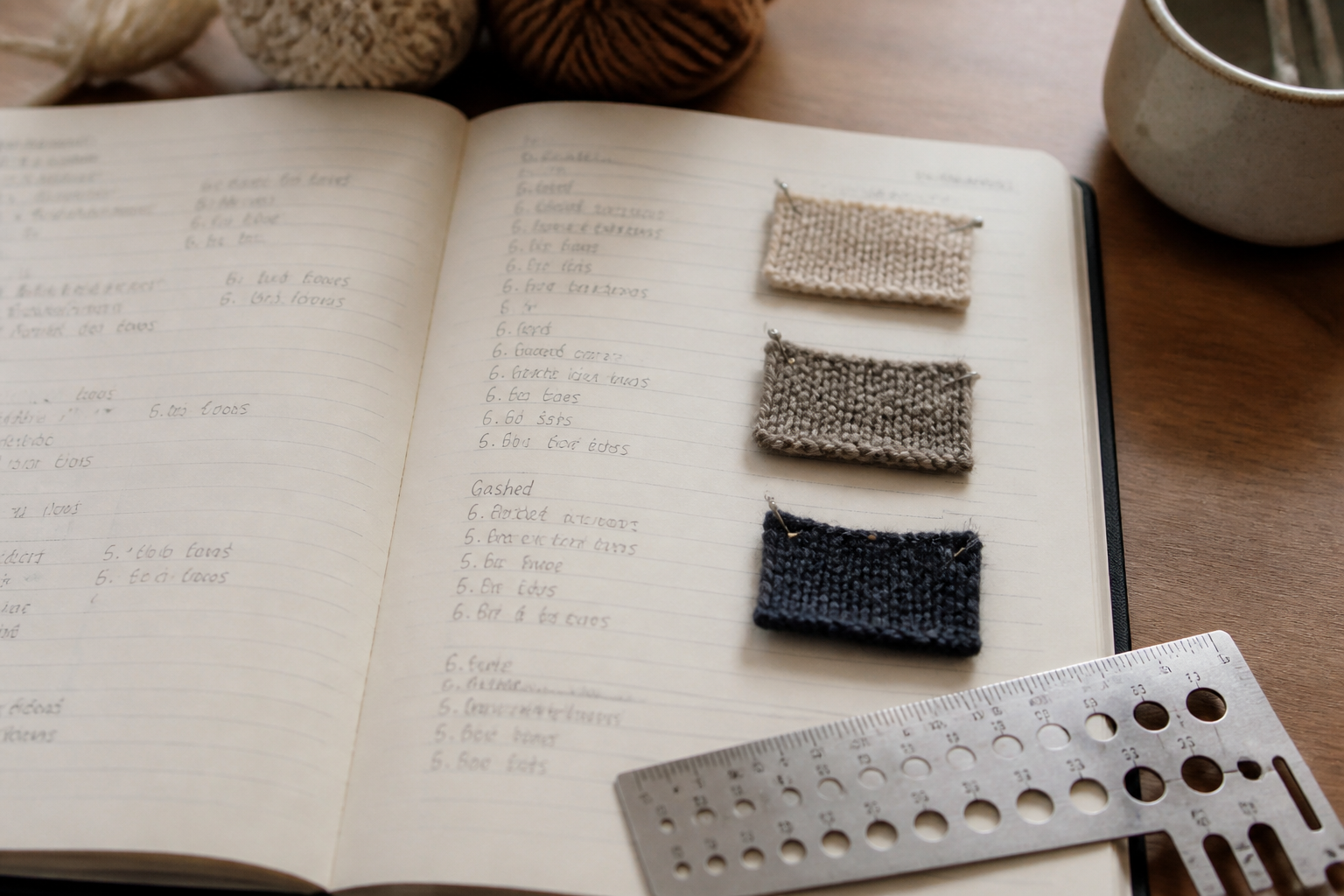
What is checked before an entry is published
- Numbers that can be measured are given with the measurement attached: gauge over 4 in (10 cm), needle sizes in millimetres with the US equivalent, yardage in yards.
- Ranges are given as ranges. A stitch count that depends on a hand, a foot or a tension is written as depending on it.
- Estimates are labelled as estimates, and the method is shown so that the reader can redo the sum with their own numbers instead of trusting mine. That is why the entry on gift knitting asks you to time yourself rather than quoting an average.
- Standards are named where they exist, for instance the eight-category yarn weight system used throughout the yarn label entry.
What is not published here
- No prices. They change, they differ by country, and they date an entry faster than anything else.
- No brand recommendations, no affiliate links, no sponsored placements.
- No invented experience, no testimonials, and no claims about products that have not been used.
- No advice that cannot be explained. If the reason is unknown, the entry says so.
Conventions used throughout
- Gauge
- Always given over 4 in (10 cm), in the fabric named, and stated as blocked or unblocked.
- Needle sizes
- Millimetres first, US sizes in brackets.
- Yarn weights
- The standard categories numbered 0 to 7, with the common names alongside.
- Dates
- Written as day, month, year: 15/09/2025 is the fifteenth of September.
- Measurements
- Inches first, with centimetres in brackets, because most patterns in English are written that way.
A reading order, for a complete beginner
- The best yarn for a first knitting project, before buying anything.
- What to expect at a beginner knitting class, whether or not you take one.
- A gallery of knit and purl fabrics, with the scarf at the end of it.
- How to fix a dropped stitch, before you need it.
- How to read a knitting pattern, when the first real pattern arrives.
Corrections
Errors are worth reporting and are taken seriously: a craft instruction that is wrong wastes somebody's evening and sometimes their yarn. Write to the address on the contact page, saying which entry and which line. Corrections are dated and added to the entry.